Soft, Fluffy & Buttery Homemade Brioche Rolls
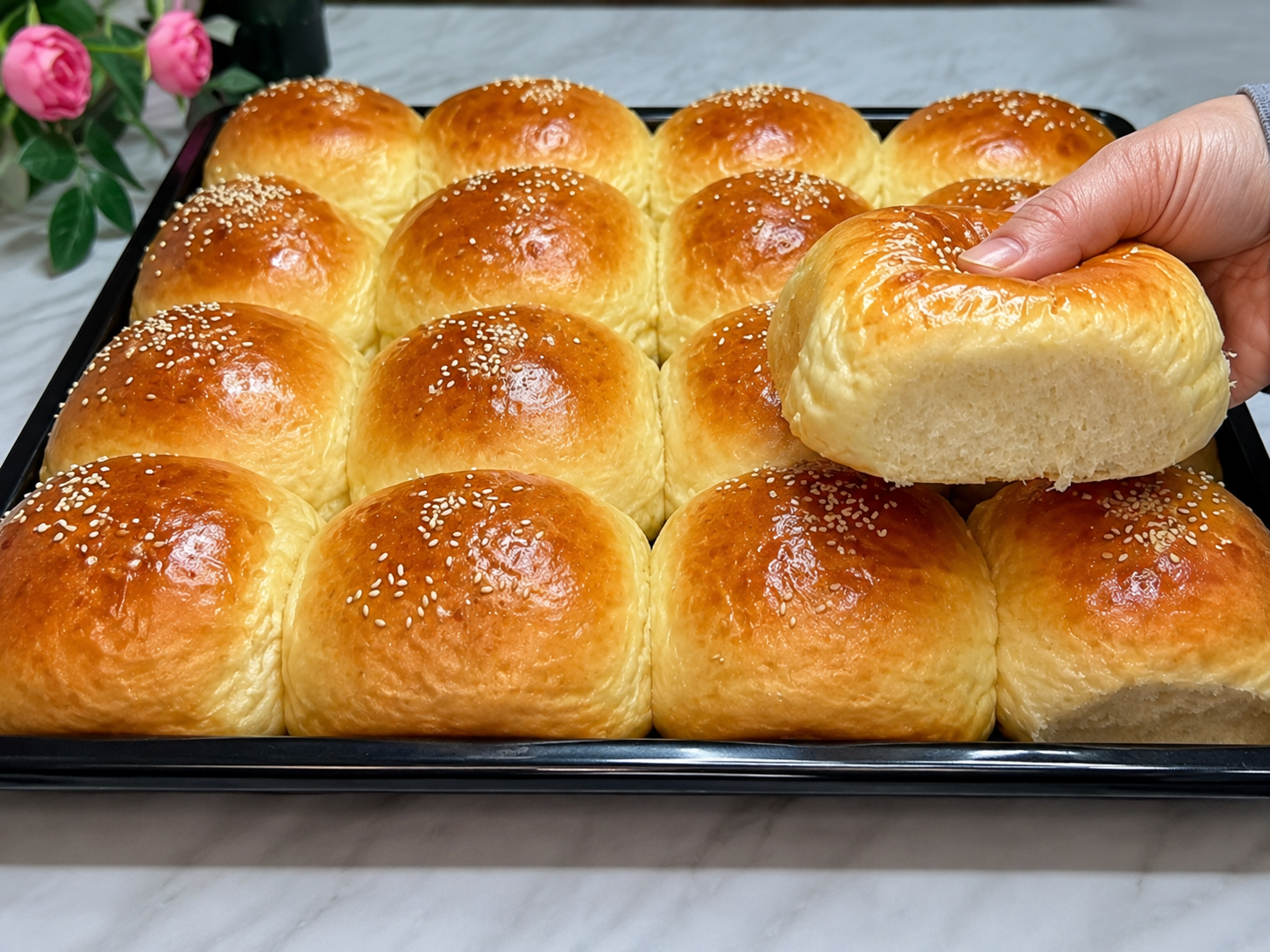
These Milk Brioche Rolls are wonderfully soft, fluffy, and tender, with a beautiful golden-brown crust and a rich, buttery center. The warm milk and eggs give the dough a delicate texture, while the butter adds that classic brioche richness.
They are perfect for breakfast, brunch, afternoon tea, sandwiches, burgers, or as a delicious side for dinner. Fresh from the oven, they are incredibly soft and smell absolutely amazing! 🥖✨
📝 Ingredients
For the Brioche Dough
- 4 cups (500 g) all-purpose flour
- 2 large eggs, at room temperature
- 1 cup (240 ml) whole milk, warmed to about 110°F (43°C)
- ¼ cup (50 g) granulated sugar
- 2¼ teaspoons (7 g) active dry yeast
- 1 teaspoon salt
- 4 tablespoons (55 g) unsalted butter, softened
- 1 teaspoon vanilla extract
For the Egg Wash
- 1 large egg
- 1 tablespoon milk
Optional Topping
- Sesame seeds
- Poppy seeds
- A little melted butter after baking
👩🍳 How to Make Milk Brioche Rolls
1. Prepare the Yeast
Start by warming the milk until it is warm to the touch but not hot. Around 110°F (43°C) is ideal.
Pour the warm milk into a large mixing bowl. Add the granulated sugar and active dry yeast. Stir gently and leave the mixture for approximately 5–10 minutes.
The yeast should begin to foam on the surface. This is a good indication that the yeast is active and ready to use.
Tip: Avoid very hot milk because excessive heat can kill the yeast and prevent the dough from rising.
2. Add the Eggs
Once the yeast mixture is ready, add the eggs and vanilla extract.
Whisk everything together until the mixture is smooth and well combined.
The eggs add richness and help create the soft, tender texture that makes brioche so delicious.
3. Add the Flour
Gradually add the flour while mixing.
Add the salt and continue mixing until the ingredients come together and form a soft dough.
The dough may look slightly sticky at first. Don’t immediately add lots of extra flour because this can make the finished rolls heavy instead of light and fluffy.
4. Add the Butter
Add the softened butter gradually, one tablespoon at a time.
Continue kneading the dough until the butter is completely incorporated.
Knead for approximately 8–10 minutes by hand, or use a stand mixer with a dough hook.
The finished dough should be:
- Soft
- Smooth
- Elastic
- Slightly tacky
- Stretchy without immediately breaking
This kneading stage is important because it develops the gluten and gives the rolls their beautiful soft, stretchy texture.
🌡️ First Rise
Place the dough into a lightly greased bowl.
Cover the bowl with plastic wrap or a clean kitchen towel and place it somewhere warm.
Allow the dough to rise for approximately 1 to 1½ hours, or until it has doubled in size.
The exact time depends on the temperature of your kitchen.
A warm environment will help the dough rise faster, while a cooler room may require more time.
🥖 Shape the Rolls
Once the dough has doubled in size, gently press it down to release excess air.
Transfer it to a lightly floured surface.
Divide the dough into 16–20 equal portions, depending on how large you want your rolls.
Take one piece of dough and gently stretch the edges underneath to create a smooth, round ball.
Repeat with the remaining pieces.
Place the shaped dough balls into a lightly greased baking pan, leaving a little space between them.
As they rise, they will expand and eventually touch each other, creating beautiful pull-apart rolls like the ones in your photo.
⏰ Second Rise
Cover the baking pan loosely with a clean towel or plastic wrap.
Allow the rolls to rise again for approximately 30–45 minutes.
They should become noticeably larger, softer, and puffier.
Don’t skip this second rise because it helps produce the light and fluffy texture of the finished brioche.
🥚 Prepare the Egg Wash
In a small bowl, whisk together:
- 1 egg
- 1 tablespoon milk
Gently brush the mixture over the tops of the risen rolls.
This gives them their beautiful shiny, golden-brown finish during baking.
If desired, sprinkle sesame seeds over the tops.
🔥 Bake the Brioche Rolls
Preheat your oven to:
350°F (175°C)
Place the baking pan in the center of the oven.
Bake for approximately 20–25 minutes, or until the tops are beautifully golden brown.
Keep an eye on them toward the end of the baking time because ovens can vary.
The tops should have a deep golden color while the rolls should feel light and fluffy.
🧈 The Finishing Touch
As soon as the rolls come out of the oven, brush their tops with a little melted butter.
This makes the crust extra soft and gives the rolls a delicious buttery flavor.
Allow them to cool for several minutes before serving.
When you pull one apart, you should see a soft, fluffy, delicate interior with beautiful strands of brioche dough. 🤤
✨ Tips for Perfect Milk Brioche Rolls
Use room-temperature eggs
Room-temperature eggs mix more easily into the dough and help create a smoother mixture.
Don’t overheat the milk
The milk should be warm, not hot. Around 110°F / 43°C is ideal for activating the yeast.
Don’t add too much flour
Brioche dough is naturally soft and slightly sticky. Adding excessive flour can make your rolls dense.
Knead properly
Good kneading develops the gluten and gives the rolls their characteristic soft and stretchy texture.
Give the dough enough time to rise
The dough should approximately double in size during the first rise.
Don’t rush the second rise
The second rise is what helps make the finished rolls light and airy.
Brush with butter after baking
A little melted butter immediately after baking gives the rolls an incredibly soft and delicious crust.
🍯 Serving Ideas
These Milk Brioche Rolls are delicious served warm with:
- Butter 🧈
- Honey 🍯
- Strawberry jam 🍓
- Raspberry jam
- Chocolate spread 🍫
- Cream cheese
- Peanut butter
- Cheese 🧀
They can also be sliced in half and used to make breakfast sandwiches, mini burgers, chicken sandwiches, or sliders.
🥖 Storage
Store completely cooled rolls in an airtight container or sealed bag at room temperature for up to 2–3 days.
For longer storage, place them in the freezer in an airtight freezer bag.
When you’re ready to eat them, simply thaw and warm them gently in the oven or microwave.
They taste especially delicious when served slightly warm.